
OpenClaw AI is a free, open-source autonomous AI agent created by developer Peter Steinberger. It runs locally and connects to large language models to complete real tasks through messaging apps. It is trending in 2026 because of its open-source growth, viral attention from Moltbook, and strong debate around AI safety and control.
What Is OpenClaw AI?
OpenClaw is a free and open-source autonomous AI agent. It was created by Austrian developer Peter Steinberger. The project first launched in November 2025 under the name Clawdbot. It was later renamed Moltbot, and finally rebranded as OpenClaw in January 2026. OpenClaw is designed to act like an AI assistant that can actually perform tasks.
Instead of just chatting, it can:
- Connect to messaging apps
- Use external AI models
- Execute workflows
- Automate actions
It runs locally on a user’s system and connects to large language models such as:
- Claude
- DeepSeek
- OpenAI GPT models
Its main goal is to create an AI that “actually does things,” not just responds with text.
Why Is OpenClaw AI Trending?
OpenClaw became popular in late January 2026. Here are the main reasons:
- Viral Growth on GitHub
The project reached around 140,000 likes and 20,000 forks within weeks. - Moltbook Connection
Entrepreneur Matt Schlicht launched Moltbook, a social platform for AI agents. Its viral growth boosted interest in OpenClaw. - Open-Source Nature
Developers liked that it was free and transparent under the MIT License. - Security Debate
Cybersecurity experts raised concerns about privacy risks. - Founder Joining OpenAI
On February 14, 2026, Steinberger announced he would join OpenAI and move the project to an open-source foundation. - MoltMatch Dating Incident
News coverage about an AI-created dating profile increased public attention.
Because of these factors, OpenClaw quickly became one of the most discussed AI agent projects of 2026.
How OpenClaw Works?
OpenClaw works as an “agentic interface.” This means it connects AI models to real services.
Here’s how it works in simple steps:
- The bot runs locally on your computer.
- It connects to a large language model.
- You interact with it through messaging apps like:
- Signal
- Telegram
- Discord
- It performs tasks using connected services like email or calendars.
It stores configuration data and history locally. This allows it to remember past actions and adapt over time. Unlike normal chatbots, OpenClaw is built to execute workflows automatically.
Key Benefits of OpenClaw AI
OpenClaw offers several powerful advantages that make it different from normal AI chatbots. Below are the main benefits explained in simple and clear points.
1. Open-Source and Free
OpenClaw is released under the MIT License. This means anyone can view the code, modify it, and use it for free. Developers trust it more because everything is transparent.
2. Runs Locally on Your System
Unlike many AI tools that run only in the cloud, OpenClaw runs on your own machine. This gives users more control over data storage and system access.
3. Connects With Multiple AI Models
OpenClaw does not depend on just one AI model. It can connect with external large language models like Claude, DeepSeek, or GPT models. This makes it flexible and adaptable.
4. Works Inside Messaging Apps
You can control OpenClaw through apps like Telegram, Discord, Signal, or WhatsApp. This makes it easy to use because it works in platforms people already use daily.
5.Performs Real Tasks (Not Just Chat)
Most AI chatbots only answer questions. OpenClaw can actually execute workflows like checking emails, managing calendars, or performing automated actions.
6. Persistent Memory
OpenClaw stores configuration and interaction history locally. This allows it to remember past actions and behave more consistently across sessions.
7. Highly Customizable
Since it is open-source, developers can build custom “skills” and workflows. This makes it useful for personal projects, startups, and advanced automation systems.
8. Growing Developer Community
Because of its viral GitHub growth in 2026, OpenClaw has strong developer interest. A large community helps improve features, fix bugs, and expand capabilities.
Background Information of OpenClaw AI
OpenClaw started as Clawdbot in November 2025.
- It was derived from an earlier assistant project called Clawd (later Molty).
- The name changes happened after trademark concerns involving Anthropic’s Claude chatbot.
- The final name, OpenClaw, was chosen because it sounded clearer and stronger.
- Around the same time, Moltbook launched as a social network built for AI agents.
- This created a new trend: AI agents interacting online like humans.
- Companies in Silicon Valley and China began experimenting with OpenClaw.
- Developers also adapted it to work with DeepSeek models and local messaging apps.
- This mix of open-source freedom and automation power helped it grow quickly.
OpenClaw AI Comparison With Other AI Tools
| Feature | OpenClaw | Traditional Chatbots |
|---|---|---|
| Open Source | Yes | Usually No |
| Runs Locally | Yes | Mostly Cloud |
| Executes Tasks | Yes | Limited |
| Messaging App Interface | Yes | Sometimes |
| Requires Technical Setup | Yes | Often No |
Unlike tools from OpenAI or other major AI companies, OpenClaw does not provide its own large model. Instead, it connects to external models. This makes it flexible but also more complex to configure.
OpenClaw AI Security and Privacy Concerns
OpenClaw requires broad permissions to function fully. It may access:
- Messaging apps
- Calendars
- Other connected services
This raised concerns among cybersecurity experts.
Researchers warned that:
- Misconfigured setups could expose private data
- Malicious “skills” could perform hidden actions
- Prompt injection attacks are possible
Cisco’s AI security research team tested a third-party OpenClaw skill. They found examples of data exfiltration and prompt injection risks.
One OpenClaw maintainer even warned that beginners may find it too risky to use safely. Because it runs locally with powerful permissions, users must understand command-line tools and system access.
Public Reaction on OpenClaw AI
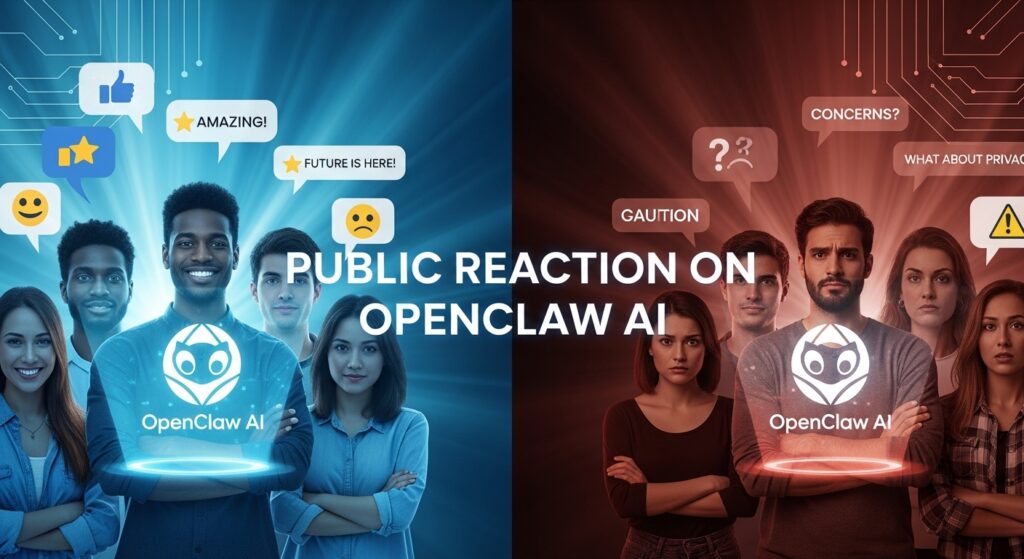
Public response has been divided. Many developers praise OpenClaw for:
- Being open source
- Encouraging experimentation
- Expanding agent-based AI
Others are worried about:
- Privacy risks
- Weak oversight of third-party skills
- Ethical concerns
Tech communities are actively debating how much control users should give AI agents. Some see it as the future of automation. Others see it as a warning sign.
FAQs About OpenClaw AI
1) What is OpenClaw AI?
OpenClaw AI is a free, open-source autonomous AI agent created by Peter Steinberger. It runs locally and connects to large language models to complete real tasks through messaging platforms.
2) Is OpenClaw AI real or fake?
It is real. The project is available on GitHub under the MIT License and has gained large developer support in 2026.
3) Is OpenClaw AI safe?
It can be safe if properly configured. However, because it requires broad system access, security experts warn that beginners should be cautious.
4) Why is OpenClaw AI trending?
It is trending due to viral growth on GitHub, the Moltbook project, security debates, and public discussion about autonomous AI agents.
Final Summary
OpenClaw AI is a fast-growing open-source autonomous AI agent launched in late 2025. It connects large language models to real services and runs locally to perform tasks. Its viral growth, security debates, and ethical concerns have made it one of the most talked-about AI projects of 2026.
1 thought on “What Is OpenClaw AI and Why Is It Trending? (Explained 2026)”