
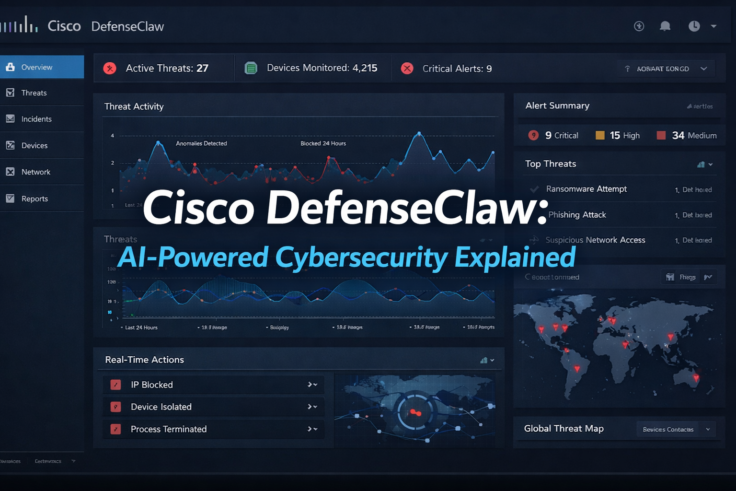

Cisco DefenseClaw is an advanced AI-driven cybersecurity system designed to detect, prevent, and respond to cyber threats in real time.
It uses automation, machine learning, and behavioral analysis to stop attacks before they cause damage.
What Is Cisco DefenseClaw?
Cisco DefenseClaw is a next-generation AI cybersecurity platform that helps businesses protect their networks from modern threats like ransomware, phishing, and zero-day attacks.
Unlike traditional security tools, it doesn’t just react—it predicts and prevents attacks.
Key Features:
- AI-powered threat detection
- Real-time monitoring and response
- Automated security workflows
- Behavior-based anomaly detection
- Cloud and network protection
It works across endpoints, cloud systems, and enterprise networks, making it a complete security ecosystem.
Why Cisco DefenseClaw Matters in 2026
Cyber threats are growing faster than ever. Hackers now use AI tools, making attacks more complex and harder to detect.
Traditional security systems struggle because they:
- Depend on outdated signatures
- React only after attacks happen
- Require manual intervention
DefenseClaw solves these problems using AI automation.
Why Cisco DefenseClaw is important:
- Stops attacks before damage
- Reduces human workload
- Works 24/7 without fatigue
- Adapts to new threats instantly
In simple terms: It’s like having a smart security guard that never sleeps.
Also: NVIDIA NemoClaw AI: Future of Autonomous AI Agents
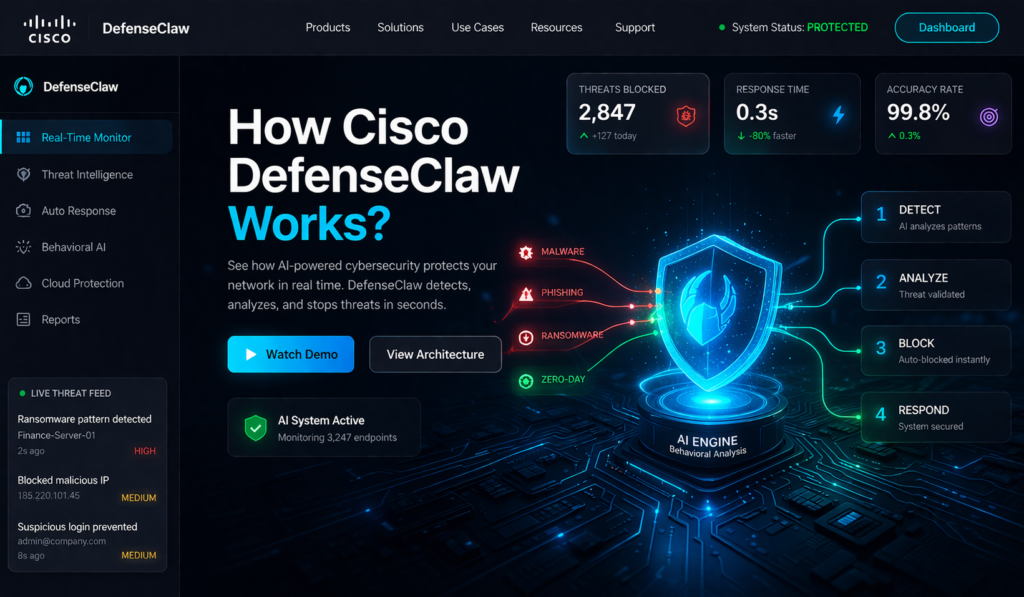
How Cisco DefenseClaw Works
DefenseClaw uses multiple AI layers to protect your system.
1. Data Collection
It gathers data from:
- Network traffic
- User behavior
- Devices and endpoints
2. AI Analysis
Machine learning models analyze patterns and detect unusual activity.
3. Threat Detection
If something looks suspicious, it flags it instantly.
4. Automated Response
It can:
- Block malicious IPs
- Isolate infected devices
- Stop suspicious processes
5. Continuous Learning
The system improves over time by learning from new threats.
This process happens in seconds, not hours.
Also: What Is OpenClaw AI and Why Is It Trending?
Benefits of Cisco DefenseClaw
1. Faster Threat Detection
AI detects threats in real-time, reducing response time drastically.
2. Reduced Human Effort
Automation handles repetitive security tasks.
3. Better Accuracy
Behavior-based detection reduces false alarms.
4. Scalable Security
Works for small businesses to large enterprises.
5. Strong Cloud Protection
Secures hybrid and multi-cloud environments.
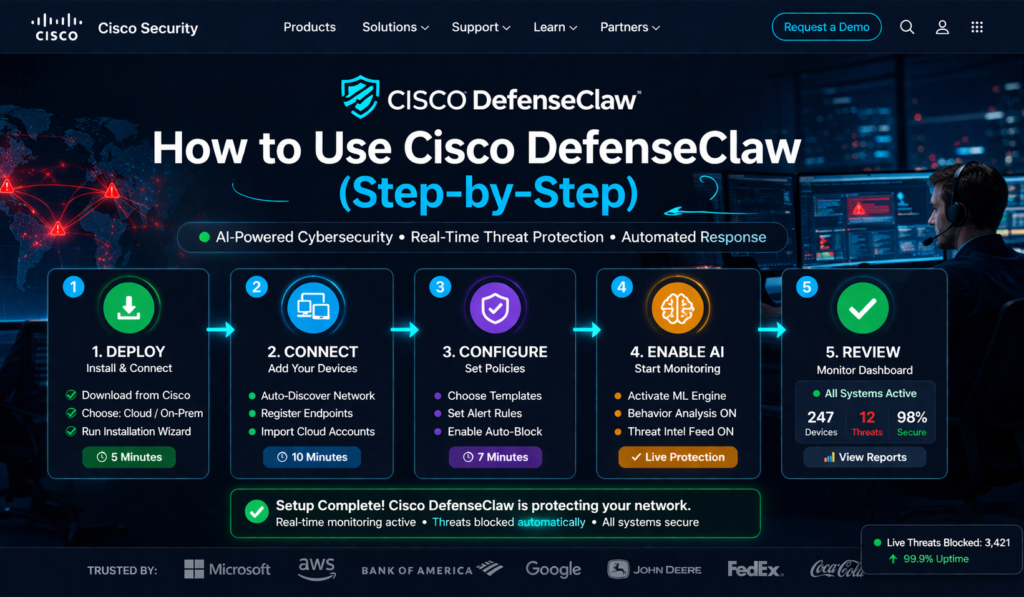
How to Use Cisco DefenseClaw (Step-by-Step)
- Integrate it with your network or cloud system
- Connect endpoints and devices
- Configure security policies
- Enable AI monitoring
- Review alerts and reports
Most actions are automated, so setup is simple compared to traditional tools.
Best Practices for Using DefenseClaw
- Keep AI models updated
- Monitor alerts regularly
- Combine with firewall and endpoint tools
- Train staff on cybersecurity basics
- Use multi-layered security approach
FAQs
1. What is Cisco DefenseClaw used for?
It is used to protect networks, devices, and cloud systems from cyber threats using AI and automation.
2. Is Cisco DefenseClaw suitable for small businesses?
Yes, it is scalable and works for both small and large businesses.
3. How is it different from antivirus software?
Antivirus tools detect known threats, while DefenseClaw predicts and stops unknown threats using AI.
4. Does it require technical expertise to use?
Basic setup is simple, but advanced configurations may need IT knowledge.
5. Can Cisco DefenseClaw prevent ransomware?
Yes, it can detect and stop ransomware behavior before it spreads.
Conclusion
Cisco DefenseClaw is not just another security tool—it’s a smart AI-powered defense system built for modern threats.
It detects, predicts, and stops attacks faster than traditional systems. With automation, real-time monitoring, and continuous learning, it helps businesses stay secure in an evolving digital world.
If you want future-ready cybersecurity, DefenseClaw is a strong solution to consider.



That sounds like a really useful approach to cybersecurity, especially with how quickly threats are evolving. It’s good to hear they’re focusing on behavioral analysis – that seems like a key area.
Absolutely! Behavioral analysis is becoming crucial because threats are getting more sophisticated every day. Focusing on how users and systems behave helps catch anomalies that traditional methods might miss.